Tag » fiction

Yadda yadda yadda…the end. (or, classics of human thought get the AutoSummarize treatment)

Words.  Who has time for them, right?  I know I don’t, and you probably don’t either.  So, inspired by Jason Huff’s AutoSummarize project of the 100 most-downloaded copyright-free books, I decided to gather a broader sampling of humanity’s greatest achievements in the form of books, speeches, songs and other works, and run them through Microsoft Word’s ever-handy AutoSummarize feature.  Prepare to expand your mind in 10-sentence fragments.

Moby Dick

by Herman Melville

white whale, shirr! The White Whale, the White Whale!”

“WHAT whale?”

White Whale—no.”

Ship, old ship! The Dying Whale.

The Whale Watch.

Man, man! “The whale! “The whale, the whale!

The Book of Genesis

19 In the sweat of thy face shalt thou eat bread, till thou return unto the ground; for out of it wast thou taken: for dust thou art, and unto dust shalt thou return.

16 Go forth of the ark, thou, and thy wife, and thy sons, and thy sons’ wives with thee.

1 Now the LORD had said unto Abram, Get thee out of thy country, and from thy kindred, and from thy father’s house, unto a land that I will shew thee:

9 Then Abimelech called Abraham, and said unto him, What hast thou done unto us? 3 Sojourn in this land, and I will be with thee, and will bless thee; for unto thee, and unto thy seed, I will give all these countries, and I will perform the oath which I sware unto Abraham thy father;

come, and I will send thee unto them. 9 Haste ye, and go up to my father, and say unto him, Thus saith thy son Joseph, God hath made me lord of all Egypt: come down unto me, tarry not:

10 And thou shalt dwell in the land of Goshen, and thou shalt be near unto me, thou, and thy children, and thy children’s children, and thy flocks, and thy herds, and all that thou hast:

19 The sons of Rachel Jacob’s wife; Joseph, and Benjamin.

2 Gather yourselves together, and hear, ye sons of Jacob; and hearken unto Israel your father.

…keep digging Yadda yadda yadda…the end. (or, classics of human thought get the AutoSummarize treatment)


View Comments

Share/Bookmark

Book report: From Russia, With Love

I’ve been a James Bond fan since I was a kid, when I rented just about every Bond film available (actually my mom rented them, but whatever) and spent countless hours absorbing them.  But for some reason I never got around to tackling any of the source material – Ian Fleming’s Bond short stories and novels.  I guess I never figured there was a reason to dig that deeply into 007, even though I’ve developed a taste for spy novels in my adulthood.

But during a recent trip to a used book store I spotted some older editions of a few Bond novels and decided to take the plunge.  So I’ve finally finished my first Bond book, 1957′s From Russia, With Love.  It’s Fleming’s fifth Bond novel and became, in 1963, the second in the film series.  I think I picked a good one to start with.

…keep digging Book report: From Russia, With Love


View Comments

Share/Bookmark

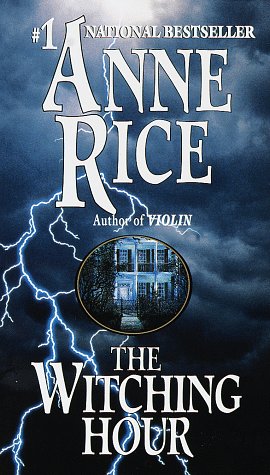
Book report: The Witching Hour

The Witching Hour (Anne Rice)Having only read one other Anne Rice novel (you guessed it, Interview With the Vampire), I learned some interesting things about her from reading her beefy 1990 tome, The Witching Hour.  I learned that she can make a book interesting even if there are actually no vampires in it.  I learned that New Orleans, in addition to being a magical place indeed, has some really beautiful flowers.  And I learned that Anne Rice sure knows a lot of different ways to describe human genitalia.

So yes, the book is interesting and even engrossing in parts and starts off with real promise. In the bar of a New York hotel a doctor remembers a most disturbing assignment – administering tranquilizing drugs to a young, catatonic woman named Deirdre.  But rather than living as a patient in a mental hospital, Deirdre sits, stupefied, in a rocking chair on the porch of her decaying antebellum home in New Orleans’ Garden District and is tended to by her elderly aunts.

Rice drops a lot of hints in these early pages that will take on greater significance later (the emerald Deirdre wears and the name Lasher for starters), but oddly enough the doctor is not one of them.  He’s really more of a human MacGuffin than anything else.  But here and throughout most of the book, Rice takes a long damn time to describe things and often does so multiple times with the same things.  I could probably pass a college course in botany for all I read about the beauty and delicacy of New Orleans flora.

The rest of the first part introduces us to the main characters.  First there’s Michael Curry, a contractor and home restoration expert living in San Francisco and suffering from the aftermath of a near drowning.  That aftermath, namely, is his newfound ability to touch people or objects and receive a flood of images concerning their past.  His new power is exciting at first but quickly becomes a curse, and so Curry locks himself away and takes up alcoholism in his spare time.

…keep digging Book report: The Witching Hour


View Comments

Share/Bookmark

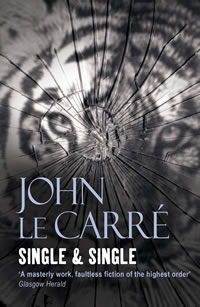
Book report: Single & Single

Don’t let the title fool you – Single & Single is in fact not the new name for Jon & Kate Plus 8.  It’s actually a 1999 novel by John le Carré, who made a name for himself in 1963 with The Spy Who Came in From the Cold.  I picked it up a few years ago solely because le Carré is the author, which should tell you how much I liked The Spy Who Came in From the Cold. I don’t know if I was aware that Single & Single isn’t a spy novel when I bought it, but it doesn’t really matter because it might as well be.

All the familiar elements are here, but in the post-Cold War world we have to make do with cutthroat Russian mobsters rather than crafty KGB agents, and put-upon British bureaucrats who lack the zip of the agents of yesteryear.  Fighting crime just isn’t as interesting as fighting Commies, let’s face it.  Still, le Carré gives it the old college try and manages to wring some excitement out of the situation.

…keep digging Book report: Single & Single


View Comments

Share/Bookmark

Book report: Time Out of Joint

Time Out of JointThere are some names in literature that for some reason intimidate me before I even read a word of their work.  Since I’m not a voracious reader I think I have a tendency to put some authors on a pedastal.  When I do get around to reading something by one of the “greats”, I feel silly for having avoided them for so long.

So it was with science fiction legend Philip K. Dick, whose canon I have finally entered by reading his 1959 novel Time Out of Joint.  Why this one, and not one of his more famous works such as Do Androids Dream of Electric Sheep? or A Scanner Darkly you might ask?  My wife owns a copy so that’s the one I decided to start with, that’s why.

As I made my way though the story of Ragle Gumm and his struggle to break through what he at first only vaguely feels to be the false suburban reality he is trapped in, I thought to myself, “self, this would make a neat movie.”  Then I remembered, “self, you’ve seen The Truman Show haven’t you?”   It’s the same basic premise really, except that instead of putting the protagonist into a fake world for the amusement of a TV audience, Gumm is placed into an idealized 1950s neighborhood to keep him focused on a very important task – entering and winning a newspaper contest called “Where will the little green man be next?”  It’s sort of a precursor to Where’s Waldo?, but it involves statistics and probability so it’s five times as hard and half as fun.

It’s a fun read, but nothing special really.  Dick keeps the action moving along at a good clip, and drops enough hints along the way to keep things interesting.  After some tentative steps and a few red herrings the central theme of “the world is not what it appears” takes center stage.  Gumm’s efforts to figure out just what is going on around him, and then to escape it, are the most interesting aspects of the novel.

I think what ultimately dulls the impact of this book for me is the big revelation of just why Gumm’s work on the newspaper puzzles is so important that he is forced to live in a fantasy world.  I don’t want to give it away totally, but basically it involves nuclear missiles and lunar colonists.

In the late ’50s these plot devices would’ve been of no small impact, seeing as how instant nuclear annihilation was a very real and commonly perceived danger and the moon was still the subject of much mystery.  But now it all seems rather quaint.  That’s not a knock on Dick mind you – he was merely writing of what he knew, but Time Out of Joint reads more like a time capsule of American phobias now than anything else.


View Comments

Share/Bookmark

Book report: The Once and Future Spy

Having recently read the magnificent spy epic The Company for the third or fourth time, I decided it was finally time to explore some of Robert Littell’s other works.  So for no particular reason I picked his 1990 novel, The Once and Future Spy (which Mrs. Suit informs me is a King Arthur reference).

While TO&FS is not nearly as engrossing or rewarding as The Company, it was fun and engaging nonetheless.  Without giving too much of the plot away, the basic story goes like this: A CIA operative named Wanamaker is running an operation (code name Stufftingle) that may or may not be officially sanctioned by the agency, but is confounded by a leak.  To find and stop the leak he brings in a retired and somewhat disgraced former Naval Intelligence officer, one Admiral J. Pepper Toothacher (yes, that’s the name they stick with) and his chauffeur/assistant/math whiz Huxstep.

The leak, as it turns out, is another CIA operative named Silas Sibley (aka The Weeder), who has personal and convuluted reasons for interfering with Wanamaker’s operation.  But he quickly gets in over his head when the Admiral and Huxstep close in on him.  The bulk of the novel details The Weeder’s attempts to save his own hide while still trying to put a stop to Stufftingle.

Had Littell just left it at that, TO&FS would have been a serviceable (albeit unremarkable) work of spy fiction.  But he adds a story device that I rather enjoyed, although some may find it hackneyed.  Sibley, as it happens, is also a Revolutionary War buff.  And not just the war, but one participant in particular, whom he refers to as “Nate.”  Sibley, who claims to be Nate’s descendant, is obsessed with Nate’s life and the circumstances leading to his early death.

As such, the novel alternates between the present and Sibley’s accounts of Nate’s activities during the war.  Nate turns out to be Nathan Hale, widely regarded as America’s first spy.  As the two stories progress, the similarities between Hale and Sibley become more obvious.  The only question is whether the similarities are truth, coincidence, or merely the figment of Sibley’s overactive imagination.

So in truth, TO&FS is as much a work of historical fiction as it is spy fiction.  And for a lot of the book, I was much more interested in Nate’s story than in Sibley’s.  Littell incorporates enough historical fact into Nate’s life to lend it credibility, so the more fanciful portions seem plausible.  The book seems a bit forced toward the end, but wraps up fairly nicely.

So I can recommend this book easily, and look forward to exploring more of Littell’s catalog.


View Comments

Share/Bookmark

Book report: The ODESSA File

Having only ever read one other Frederick Forsyth book (his 1971 debut, The Day of the Jackal), I had high hopes for The ODESSA File.  And while it isn’t quite the classic that his first novel is, it’s a damn fine yarn just the same.  It did prove, without a doubt, that the greatness of Jackal was not a fluke.  Of course, his long and successful career proves that too, but I digress.

The ODESSA File

The story takes place in 1963-64 and centers on a young freelance German reporter, Peter Miller.  Miller drives a flashy car, makes a lot of money, and sleeps with a stripper.  He knows little of the Nazi atrocities committed during World War II and, like many Germans of his generation, really doesn’t want to know much.

That all changes when, totally by chance, he comes into possession of a diary written by a recently deceased concentration camp survivor.  Upon reading the diary, Miller’s outlook and attitude change completely, and he vows to hunt down a man from the diary named Eduard Roschmann.  Roschmann was an officer in the notorious SS, and became one of the heads of the concentration camp at Riga.  Roschmann’s brutality and inhumanity earned him the nickname of “The Butcher of Riga.”

Miller sets out on his quest, but finds that going through official channels isn’t very productive – many of the state and local government employees and policemen who control the information he needs are themselves either directly or indirectly involved with the SS.  Seemingly in control of all of them is ODESSA, an organization of former SS dedicated to hiding, protecting, and aiding their own.  Before long, Miller ends up on their radar and they determine he must be dealt with.

That’s as much of the story as I care to divulge here (I’ve probably said too much already).  One thing became clear as I read The ODESSA File – Forsyth is not afraid to do his homework.  The level of historical detail in this novel is extremely impressive.  It was all I could do to not get bogged down in it, for it was as fascinating in and of itself as the story.

Fortunately, that story is never bogged down by these details.  Indeed, the narrative bears a lot of resemblance to the fast-moving Jackal.  On one side there is a lone, driven man on a mission.  On the other is the force trying to stop him at all costs.  Forsyth’s particular skill lies in making both sides’ (actually three, in this case) stories fascinating, and in effectively building the tension as the they head toward their inevitbale showdown.

If I had any doubts about reading more of Forsyth’s novels, I have none now.  This one and Jackal were extremely engrossing, and motivated even a slow reader like me to get moving.  There’s even a film adaptation starring Jon Voight that I will check out.

One word of warning – there is a frankness in the level of detail in this book concerning the activity at the Riga concentration camp that some may find rather unsettling.  I know I did.  Nevertheless, it’s a highly recommended book for fans of action, spy novels, or historical fiction.


View Comments

Share/Bookmark