Tag » football

Burst bubbles and stale bubble gum

Via the Consumerist is a recent Slate article concerning the great baseball card craze of the ’80s and ’90s.  It contains an excerpt from a new book by Dave Jamieson called Mint Condition: How Baseball Cards Became an American Obsession.  It’s a topic I am all too familiar with as a former sports card and comic collector.  I never became a card speculator, as others of my age did, so I didn’t get burnt too badly.  Nevertheless, I have binders full of football cards that are now barely worth the plastic sheets that house them, thanks in large part to the ludicrous overproduction and subsequent cheapening of cards in the ’80s and ’90s.

I had a lot of fun collecting cards back in the day – I didn’t care much about the value of the cards although I did try to keep them in the best condition possible.  Something about filling holes in my collection scratched me where I itched (a need I fill now by collecting songs).  That naturally led to some suspect purchases, and it started to become obvious even as a teenager that card collecting wouldn’t be a lifelong hobby for me.

The moment when I knew things had gone too far came when I was about 14 or 15.  I stopped into a local comic and card shop, a regular haunt for me, to peruse some possible new additions.  As I approached the counter I saw a kid who couldn’t have been more than 8 or 9 years old haggling with the shop owner over some cards like it was the SALT treaty sessions.  I can still remember the feeling of sadness and disgust I experienced that day; a day when I knew it was time to move on from card collecting.

This phenomenon extended not just to baseball cards but to football and other sports cards, as well as comics.  I got a little suckered there, as I distinctly remember buying multiple copies of Todd McFarlane’s Spider-Man #1 in 1990.  But for the most part I just collected comics I liked, regardless of value.  That’s why I’m more likely to hold onto a lot of the comics I bought, instead of the cards.

One thing I did learn from the whole collecting phase of my youth is this – if you see something that actually says “Collector’s Item” on the package, it’s probably not.


View Comments

Share/Bookmark

8 things I miss in sports

CNNSI ran an interesting piece this week called “25 Things We Miss in Football“, and while it hit on a few things I would definitely have in my own list (Al Davis as a genius, well-dressed coaches, and the Orange Bowl played in the Orange Bowl) there are naturally some missing items.  So to rectify that I’m going to list the things I miss not just in football, but in sports in general.  Let’s take a look!

1. Helmet/Bullpen Carts:  I miss helmet and bullpen carts for a few reasons.  One is the pure fun and novelty of the concept.  I mean, the notion that a professional athlete needs motorized assistance to travel a few hundred feet is laughable on its face.  Still, despite all the cynicism of our modern age I have to think there’s room in peoples’ hearts for sweet rides like this or this.

Secondly, seeing an athlete with a career-threatening injury being carted off the field in what looks like a bizarre amusement park ride doesn’t seem quite so sad.  I’m sure carts like these are still in use somewhere, but not seeing them on the professional level is sad.  (Paul Lukas of Uni Watch wrote a good article on bullpen carts a few years ago)

…keep digging 8 things I miss in sports


Tough acts to follow

No matter what poor Aaron Rodgers does for the Green Bay Packers, it’s highly unlikely that he will ever be able to live up to the legacy of a certain quarterback who wore #4 and whose name has been mentioned way too much for my liking lately.

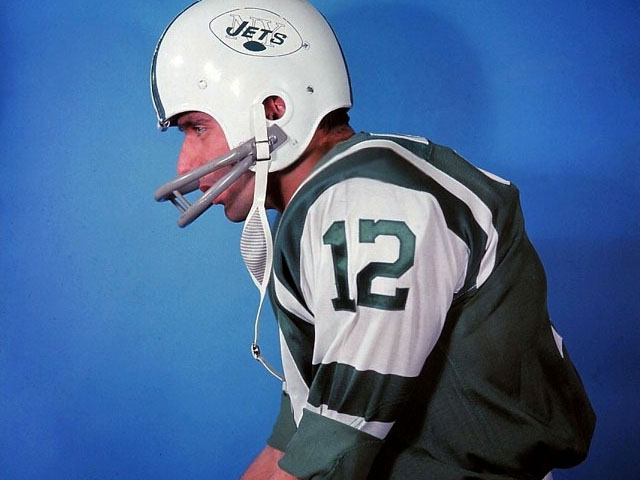
But while most of the media focus has been on the story of another aging star quarterback moving to a new team (invoking names like Joe Namath and Johnny Unitas in the process), what about those like Rodgers, who are left behind to deal with the aforementioned legacies?  While some have managed to step out of the long shadows cast by their predecessors, most have not.  Here’s a sampling:

Scott Hunter, Green Bay Packers – Selected by the Packers in the 6th round of the 1971 NFL draft, Alabama University’s Hunter had the unenviable task of replacing the legendary Bart Starr, who retired that year.  It was Starr, after all, who helped lead Vince Lombardi’s team to dominance in the ’60s, winning five NFL championships and the first two Super Bowls.  But age and Lombardi’s retirement in 1968 took their toll on the mighty Pack, and the team quickly descended into mediocrity despite Starr’s best efforts.

With Hunter under center, the 1972 Green Bay squad regained some of their past glory.  They won 10 games and took their first divisional title since 1967, but lost 16-3 to the Redskins in the Divisional round of the playoffs.  They never made it back the postseason for the rest of the decade.

After 1973 Hunter bounced to the Bills, Falcons, and finally the Lions, where he ended his career after the 1979 season.  He finished with a career record of 21-18-3, and threw for just over 4,700 yards.  The Packers, meanwhile, were never more than mediocre for a few decades before head coach Mike Holmgren and the quarterback-who-shall-not-be-named arrived in 1992.

Steve Young, San Francisco 49ers – You may have heard of this guy, as he did one or two good things in the NFL during his career.  You know, seven Pro Bowls, two league MVP awards, one Super Bowl title (two more as a backup) – that sort of thing.  But before all that, things weren’t exactly rosy for this BYU product.  In 1984 Young signed with the Los Angeles Express of the upstart USFL out of college.  His (and the league’s) last season was 1985, where things got so grim for the team that he was forced to play running back.

After a brief and rather inauspicious stint with the Buccaneers from ’85 to ’86, Young was traded to San Francisco to serve as Joe Montana’s backup.  It was here that he began to flourish, and by 1993 Montana was history (traded to the Chiefs) and Young was the undisputed starter.  It then took only a few seasons for him to get the proverbial monkey off his back and lead the 49ers to a blowout win over the Chargers in Super Bowl XXIX.

Concussions finally got the best of Young, whose last season in the league was 1999.  While he couldn’t eclipse Montana’s greatness, he left behind a pretty impressive legacy of his own.  He was elected to the Pro Football Hall of Fame in 2005 and still holds the records for career QB rating (96.8), career rushing TDs by a quarterback (43), and TD passes in a Super Bowl (6 in XXIX).

Jay Fiedler, Miami Dolphins – Somewhere in between Hunter and Young comes Jay Fiedler.  Fielder entered the league from Dartmouth in 1994 and spent most of his time holding a clipboard with the Eagles, Vikings, and Jaguars (where he got his first start in 1999).  He came to the Dolphins in 2000, the first year of the post-Dan Marino era.

The Fins made the playoffs twice under Fiedler and new head coach Dave Wannstedt, in 2000 and 2001.  The 2000 team finished 11-5, won the AFC East for the first time since 1994, and beat the Colts in the Wild Card round before getting blanked by the Raiders the next week in Oakland.  The team matched their 11-5 mark in 2001 but were suffocated by the stout Baltimore Ravens defense in a 20-3 Wild Card round loss.  Fiedler threw one touchdown and seven interceptions in his Miami postseason career.

Although Miami posted winning records in two of Fiedler’s next three seasons with the team they failed to make the playoffs, and by the end of 2004 both he and Wannstedt were finished.  Fiedler signed with the division rival Jets as an unrestricted free agent in 2005 (as a backup for Chad Pennington) but suffered a season-ending injury in week 3.  He hasn’t played in the league since, while the Dolphins are still looking for a true successor to Marino.

Mark Malone/David Woodley, Pittsburgh Steelers – Four-time Super Bowl champion Terry Bradshaw staggered to the finish line of his career in the Steel City, missing most of the 1983 season after elbow surgery.  His lone start that year (December 10 against the Jets) was his final game, ending a run under center as part of the most dominant franchise of the ’70s.

Cliff Stoudt, who started in Bradshaw’s place during the ’83 campaign, signed with the USFL in 1984.  So the Steelers opted for a two-headed approach to quarterback in ’84, and those two were Mark Malone and David Woodley.  Malone had seen little action as a backup since being drafted by Pittsburgh in 1980, while Woodley came from the Dolphins (whom he led to an appearance in Super Bowl XVII just two seasons earlier) via trade after losing his starting job to Dan Marino.

The 1984 season began with Woodley as the starter, but by season’s end the job was Malone’s.  Pittsburgh took the AFC Central with a 9-7 record, won their first playoff game since Super Bowl XIV, and advanced to the AFC Championship, where they were swamped by Marino’s Dolphins.  The pair resumed co-starting duties in 1985, but finished just 7-9 and missed the playoffs.

Woodley unexpectedly retired before the 1986 season, leaving Malone to assume the role of full-time starting QB.  He kept that job until he was traded to the Chargers before the 1988 season, and was replaced by Bubby Brister.  Malone’s final season was with the New York Jets in 1989, where he played just one game.

Woodley, who was 24 when he made his Super Bowl appearance with Miami, never again lived up to the potential he showed when he replaced another legend – Bob Griese.  He fell hard into alcoholism and received a liver transplant in 1992 (not yet 35 years old at the time).  Woodley died in 2003 of complications from kidney and liver failure.  He was 44.

Todd Collins, Buffalo Bills – Despite falling short in four straight Super Bowls, Jim Kelly is to this day an icon in Buffalo.  A few years after he came to the Bills from the USFL in 1986, Buffalo became the most dominant team in the AFC.  It all finally came to end for Kelly when the Bills lost to the Jacksonville Jaguars, 30-27, at home in the Wild Card round of the ’96/’97 postseason.

At the time of Kelly’s retirement, only Fran Tarkenton, Dan Fouts, and Johnny Unitas among Hall of Fame quarterbacks had passed for more yardage.  His replacement was Todd Collins, who was drafted by Buffalo out of the University of Michigan in 1995.  He had performed fairly competently in a handful of spot starts over two seasons before winning the starting job outright in 1997 (over such luminaries as Alex Van Pelt and Billy Joe Hobert).

Collins started 13 games in ’97, and threw for 2,367 yards, 12 TDs, and 13 interceptions as Buffalo went 6-10 (their worst record since Jim Kelly’s first season) and finished fourth in the AFC East.  With that, he headed west to Kansas City (the Bills didn’t exactly throw themselves on the hood of his car), where he spent eight years doing little more than taking up space on the Chiefs’ bench.  Collins didn’t play a down until being appointed the team’s #2 QB in 2001.  He finished his Chiefs career with 229 passing yards and one touchdown.

In 2006 Collins signed with the Redskins but again saw no action.  His shot finally came in 2007 when starter Jason Campbell injured his knee late in the season.  Collins rallied the ‘Skins, already reeling from the murder of teammate Sean Taylor, to four straight victories and an improbable postseason berth.

Although the Redskins were pasted by the Seahawks in the Wild Card round, Collins’ accomplishment can’t be denied.  After playing precious little football outside of practices and scrimmages for a decade, he led a team numbed by tragedy to a place few thought they could go.  Although he enters the 2008 season as the team’s backup once again, he was rewarded for his contributions with a new 3-year, $9 million contract.


View Comments

Share/Bookmark

Now accepting donations for a DirecTV subscription

I’m not sure how things work outside the New York City television market, but we have this annoyingly restrictive setup when it comes to NFL broadcasts.  Whether or not you like the Jets or Giants, they’re almost always the only games you get to watch on Sunday afternoon.  And it usually works out that the Jets game is on at 1, then the Giants at 4.  There are no other games broadcast opposite them, and the networks pretty much never cut away to another game even if it’s a blowout.

What this means is that if you don’t feel like a) going to a bar or b) coughing up some big bucks for DirecTV and the NFL Sunday Ticket package, you’re pretty much screwed.  The situation got a little better for me when I moved to central Jersey about 4 years ago, as I’m now also in the Philly market and get the option of watching Eagles games.  But not much better, as I’m a lifelong Raiders fan.

My worst nightmare, come to life

My worst nightmare, come to life

I’ve come to accept my lot in life, and the fact that any football talk I’m exposed to around here is logically focused on the Jets and Giants.  But I fear that this situation will quickly become untenable, with the recent announcement that the NFL’s premiere drama queen, Brett Favre, was traded to the Jets.

This is not good, not good at all.  To no one’s surprise, the usual legion of Favre worshipers in the media are already working themselves into a nice lather over this momentous occasion.  Witness Sports Illustrated‘s Peter King – always good for at least one worthless/ignorant/insanely hyperbolic statement per article – declaring that, “One of the biggest stories in recent sports history just got a lot bigger: Brett Favre is a New York Jet.”

No Peter you giant tool, it’s not one of the biggest sports stories in recent history.  It’s an irritating display of aggrandizement on Favre’s part, and you clowns in the media have been all too happy to help.  It got so bad that ESPN, which fell on the wrong side of the credibility threshold a long time ago, introduced a separate “Favre” ticker item at the bottom of the screen.

I don’t begrudge Favre for wanting to play another season.  Pro sports is not like most jobs – once the window has closed on your useful playing life (which for the majority of players is in their 20s), it’s closed forever.  But this insane amount of press coverage does nothing but reinforce what has to be his belief that the sporting world revolves around him, and that people outside Wisconsin and Bristol, Connecticut actually give a shit what he does.

And so now he comes to the Jets, and the most intense media market in the country.  I will be helpless to escape the gravitational pull of his ego and the obnoxiousness of Jets fans.  And now I have to suffer through the usual game time pabulum like “he’s a real gunslinger” and “look at him, he’s just having fun out there!”.

And just wait until John Madden rolls into town.  I think he may actually spontaneously combust now.  And I may just light myself on fire.  I guess I could always watch the Giants or Eagles instead.

Man, now I’m really depressed.


View Comments

Share/Bookmark

A football fantasy

The scene: Lambeau Field, early morning on July 27

Brett Favre, helmet in hand, strides onto the practice field and approaches Aaron Rodgers as a phalanx of reporters and fans cheers.

BRETT FAVRE

Hey Aaron!  I’m here buddy!  Listen, I know I said I was done with football, but I just couldn’t stay away.  I hope that’s cool with you, man.

Aaron looks around tentatively and takes a few steps back.  He runs directly in front of Brett, wheels back his right leg, and kicks him square in the nuts.

The End


View Comments

Share/Bookmark

The Kasem Syndrome – 7 classic celebrity meltdowns

Now that Easter’s over (well, one of them anyway), I thought I’d take a few minutes to celebrate anger. Not the kind of anger that starts wars or incites mindless violence, but rather the kind of anger that causes people in the public eye to make complete asses of themselves. In other words, the kind of anger we can all enjoy. So I’ve spent at least 20 minutes scouring YouTube for some prime examples of celebrity anger.

Mind you, I’m not attempting to judge anyone here. I doubt there’s anyone amongst us (among? I never remember.) who hasn’t looked back at some of our own outbursts and wondered how ridiculous we must’ve looked to others. Fortunately we had the benefit of not being recorded at the time. There is something to be said for being anonymous nobodies I guess.

1. Lee Elia loves Chicago.

The hyper-competitive world of professional sports tends to bring out the worst in people, and I’m hard-pressed to think of a better example of this than Chicago Cubs manager Lee Elia’s immortal post-game rant from April 29, 1983. The Cubbies, who had finished no better than 3rd in their division since 1972, had just suffered a one-run loss to the Dodgers to fall to 5-14 on the young season. This, combined with incessant booing from the few fans in attendance, seems to have driven Elia over the edge. As he unleashes his bitter tirade against Chicago fans you can almost hear the blood vessels in his head burst.

YouTube Preview Image

…keep digging The Kasem Syndrome – 7 classic celebrity meltdowns


View Comments

Share/Bookmark

Golf and race

To absolutely no one’s surprise, Dave Seanor (the editor of Golfweek magazine who approved a recent cover featuring a noose) was canned. The firing made sense for a very basic reason that had nothing to do with racism – Seanor made a ham-fisted effort at generating buzz for his magazine, and any person with an ounce of common sense could have predicted the shitstorm that would follow its publication. Pissing off readers (and by association your advertisers) is career suicide in the newspaper/magazine world.

But beyond the colossal bad taste exhibited by Seanor, there was a real missed opportunity here. While the actual story accompanying the noose image focused almost exclusively on a single comment made by Golf Channel announcer Kelly Tilghman, it missed the bigger picture. And that is what appears to be a not altogether minor undercurrent of racism in the American golf world. I’m not saying that Seanor or Tilghman are racists (but at a very minimum they are incredibly stupid), but they are not the first people in golf to be targeted for what certainly appear to be racist words or deeds.

…keep digging Golf and race


View Comments

Share/Bookmark